Brioche
Brioche
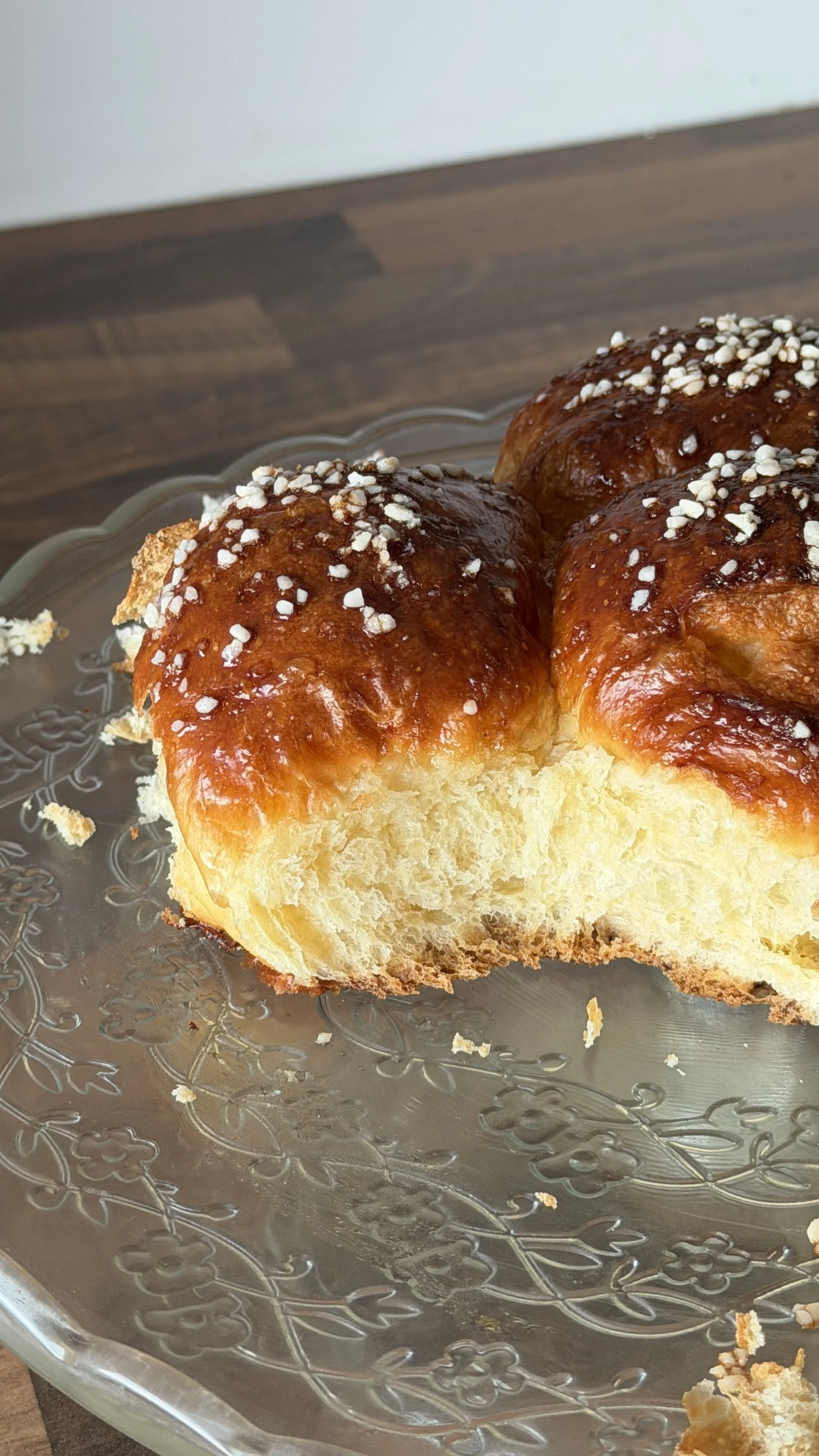
Rich, buttery and impossibly soft — the kind of bread that makes the whole process feel worth it
Ingredients
The dough
- 285g strong bread flour
- 6g fine salt
- 10g fresh yeast
- 50g whole milk
- 3 eggs
- 1 egg yolk
- 170g butter, softened
- 40g caster sugar
To finish
- 1 egg, beaten (egg wash)
Method
Step 1 — building the dough
Brioche rewards patience. The mix-and-rest cycles might feel slow, but they're building the structure that will hold all that butter — don't cut corners here.
Place the flour, salt, fresh yeast, milk, eggs and egg yolk in the bowl of a stand mixer fitted with a dough hook. Mix on low speed for one minute, just until no dry flour remains.
Increase to medium speed and mix for 3 minutes, then stop the machine and leave the dough to rest for 3 minutes. Repeat this mix-and-rest cycle until the dough reaches medium development — it should stretch when pulled, but tear before a clean windowpane forms.
Step 2 — adding the butter & sugar
The butter must go in gradually — adding it all at once will break the dough. Make sure each addition is fully absorbed before adding the next.
With the mixer running on medium, begin adding the softened butter in small pieces, a few at a time, waiting for each addition to be absorbed before adding the next. Once all the butter is incorporated, add the caster sugar and continue mixing for 5 minutes.
Increase to high speed and mix for 8 minutes, until the dough is smooth, glossy and pulls cleanly away from the sides of the bowl.
Turn the dough out onto an unfloured surface and slap and fold 5–10 times to build a final burst of strength. It should feel silky and hold its shape as a smooth ball.
Step 3 — the first proof & the chill
Place the dough in a lightly oiled bowl and cover with cling film. Leave to proof at room temperature for 1 hour, until noticeably risen.
Press the dough down firmly with your hands to release the gas, then wrap tightly and transfer to the fridge. Chill for a minimum of 4 hours — overnight is best. The cold rest firms the butter and makes the dough far easier to shape cleanly.
Step 4 — shaping, proofing & baking
Remove the dough from the fridge and divide into 12 equal pieces. Shape each one into a tight, smooth ball by cupping your hand over the dough and rolling it in small, confident circles against the work surface.
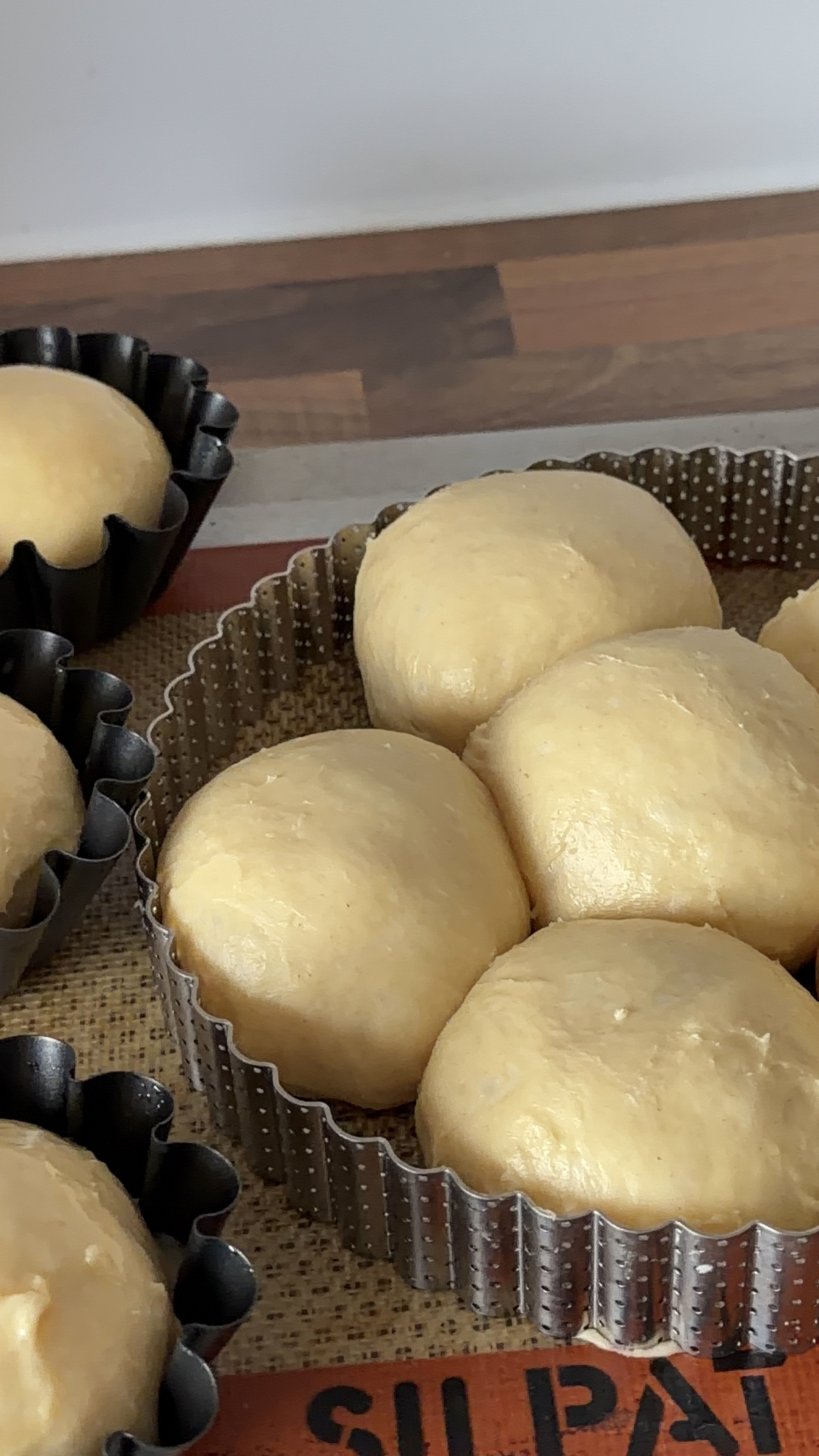
Arrange the balls in your tin or mould, cover loosely with cling film and leave to proof for 3 hours at room temperature, until puffed, pillowy and touching each other.
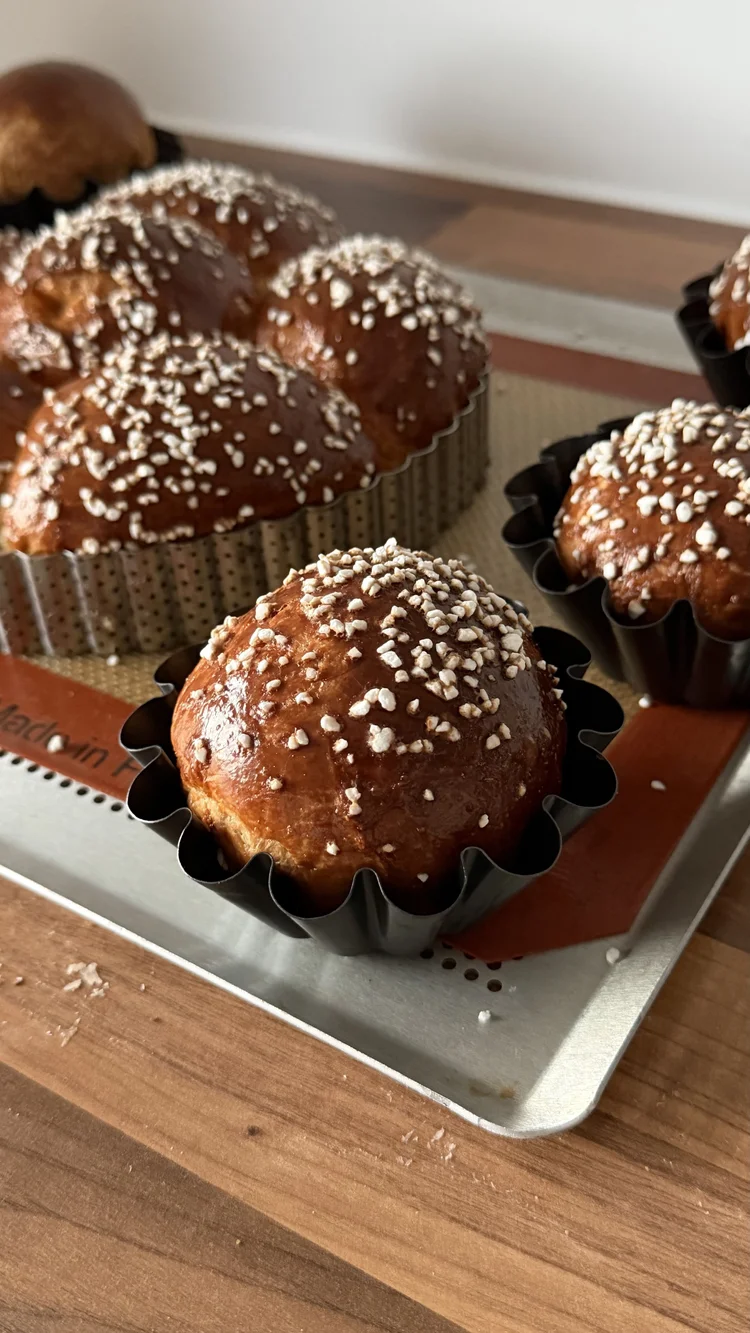
Preheat the oven to 200°C. Gently brush each ball with egg wash, being careful not to press down and deflate them.
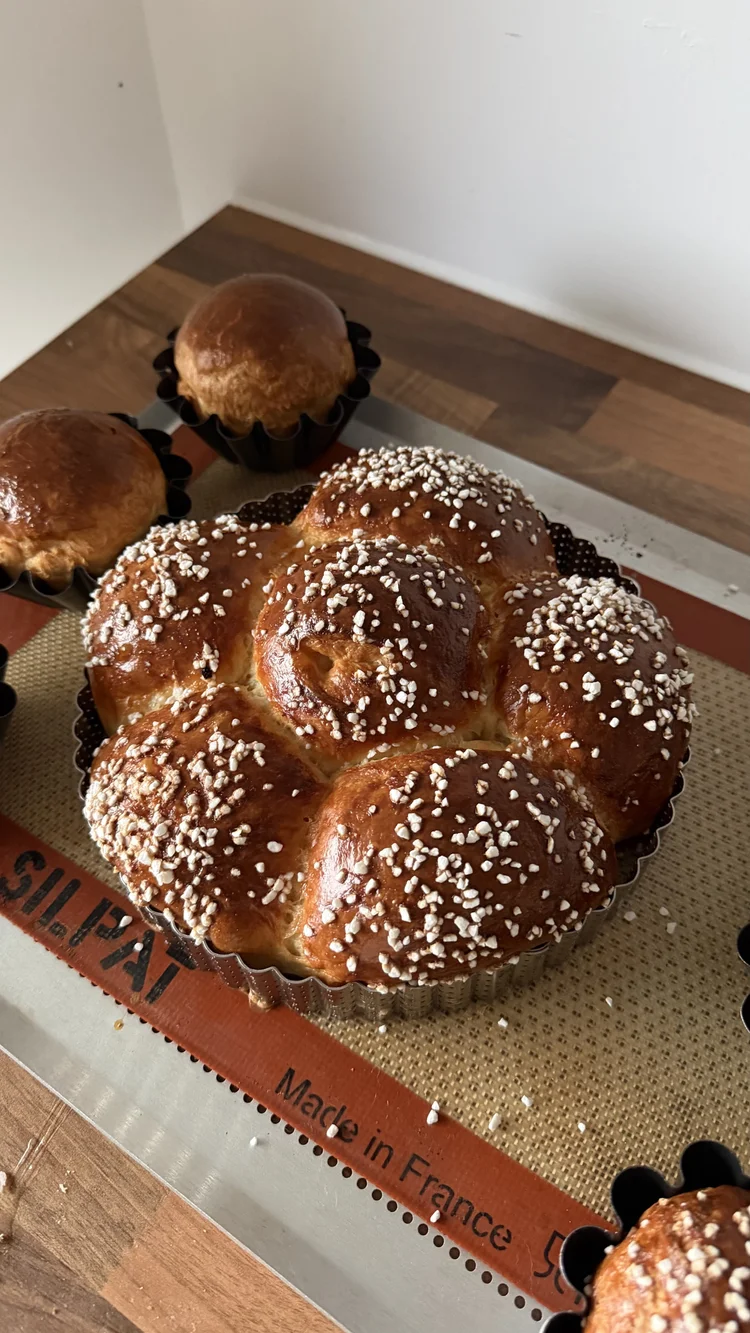
Place in the oven, immediately reduce the temperature to 180°C and bake until deeply golden — 20 minutes for individual balls, 35 minutes for a loaf. The brioche is ready when a digital thermometer inserted into the centre reads 80°C. Leave to cool in the tin for 10 minutes before turning out.
A few notes
Brioche is best eaten the day it's baked — the crumb starts to dry out quickly, though it toasts beautifully the next morning. For the best results, always chill the dough overnight: it's easier to handle and the flavour deepens. If you can't find fresh yeast, use 5g of fast-action dried yeast instead.
A few more views