Clotted Cream Tiramisu
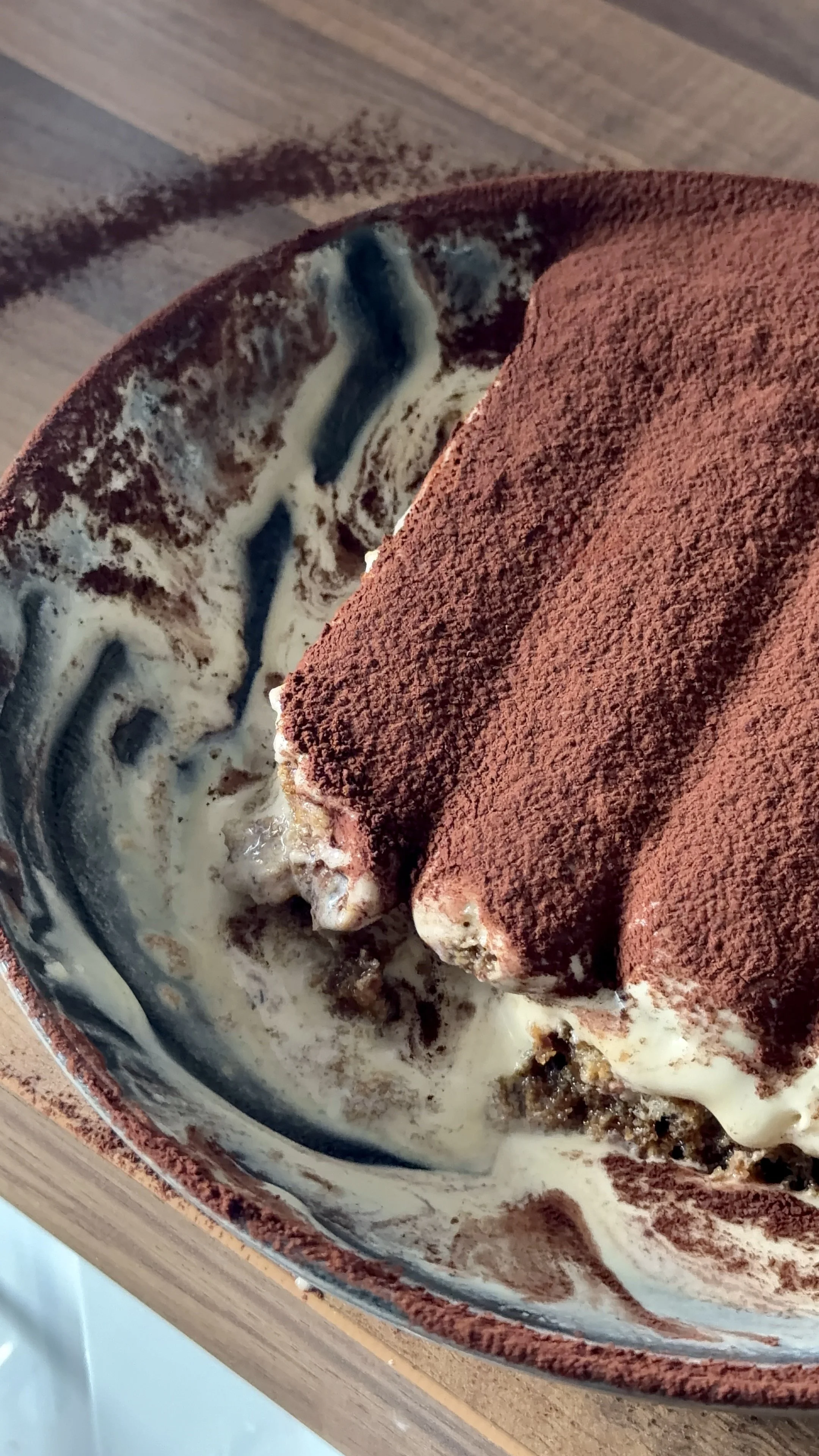
A richer, more British take on the Italian classic - no alcohol, no mascarpone, just deeply bitter espresso and the kind of cream you'd put on a scone.
Why this works:
Traditional tiramisu uses mascarpone, a fresh Italian cheese with a mild tang and dense, stable texture. Clotted cream is richer, more buttery, and has a subtle sweetness that mascarpone doesn't - it makes the cream layer feel more indulgent without being heavier. The trade-off is that clotted cream has no acidity at all, so the espresso has to work harder. That's actually a good thing: it pushes you toward a properly strong, bitter coffee that cuts through the richness in every mouthful.
The sabayon method - cooking the egg yolks with sugar and espresso over a bain-marie before folding into the cream - is borrowed from French pastry. It's more controlled than the traditional raw yolk method, gives you a cleaner flavour, and sets more reliably in the fridge. It's also safer to eat.
Prep: 45min | Setting time: 6hrs (overnight is best) | Makes: 2 generous, or 4 smaller portions
Level: intermediate
Ingredients:
For the sabayon
3 egg yolks
60g caster sugar
20g cold espresso (about 1 ristretto shot)
For the cream base
200g clotted cream
25g icing sugar, sifted
For the assembly
2 ristretto shots of strong espresso (approximately 80g total), completely cold
12-14 savoiardi (sponge fingers)
Unsweetened cocoa powder to finish
Method:
1. Make the sabayon. Set a heatproof bowl over a pan of barely simmering water, making sure the bottom of the bowl doesn't touch the water.
Add the egg yolks, caster sugar, and 20g of cold espresso. Whisk constantly and vigorously - you're looking for the mixture to roughly triple in volume, turn very pale and thick, and reach what's called ribbon stage: when you lift the whisk, the mixture should fall in a thick ribbon that holds its shape on the surface for a couple of seconds before dissolving back in. This takes around 8-10 minutes and you need to keep whisking throughout. Aim for 70-72°C on a thermometer.
Once it's at ribbon stage, take it off the heat and keep whisking until it cools to room temperature. Setting the bowl in a larger bowl of cold water speeds this up. Don't skip the cooling as folding warm sabayon into the cream will melt everything.
2. Prepare the cream base. Loosen the clotted cream with a spatula until smooth. It may look slightly grainy, that's completely normal and nothing to worry about, it's just the nature of clotted cream.
Add the sifted icing sugar and mix gently until combined.
3. Fold together. Add the cooled sabayon to the clotted cream in two or three additions, folding carefully with a large spatula.
To fold properly: cut the spatula down through the centre of the bowl, sweep along the bottom, and turn the mixture up and over. Rotate the bowl a quarter turn and repeat. You want a smooth, mousse-like mixture that holds soft peaks - work gently to keep as much air in as possible.
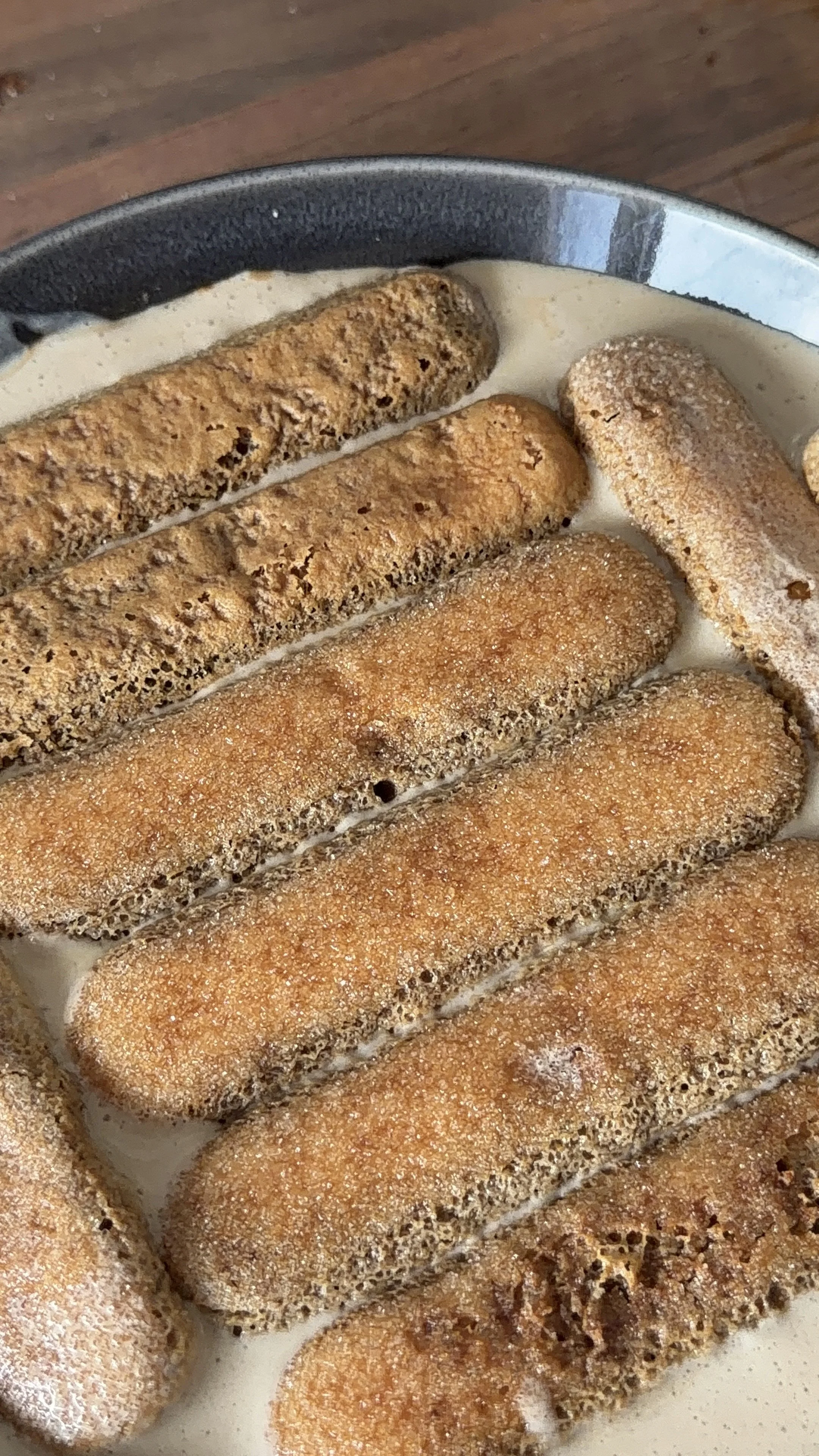
4. Assemble. Pour your cold espresso into a shallow bowl. Dip each sponge finger briefly - one second per side, no more. You want them just soaked through but still holding their shape. Lay them in a single layer in your dish, then spoon over roughly half the cream mixture and smooth it level. Repeat with a second layer of fingers and the remaining cream. Smooth the top carefully.
Cover with cling film pressed directly onto the surface of the cream and refrigerate for a minimum of 6 hours, ideally overnight.
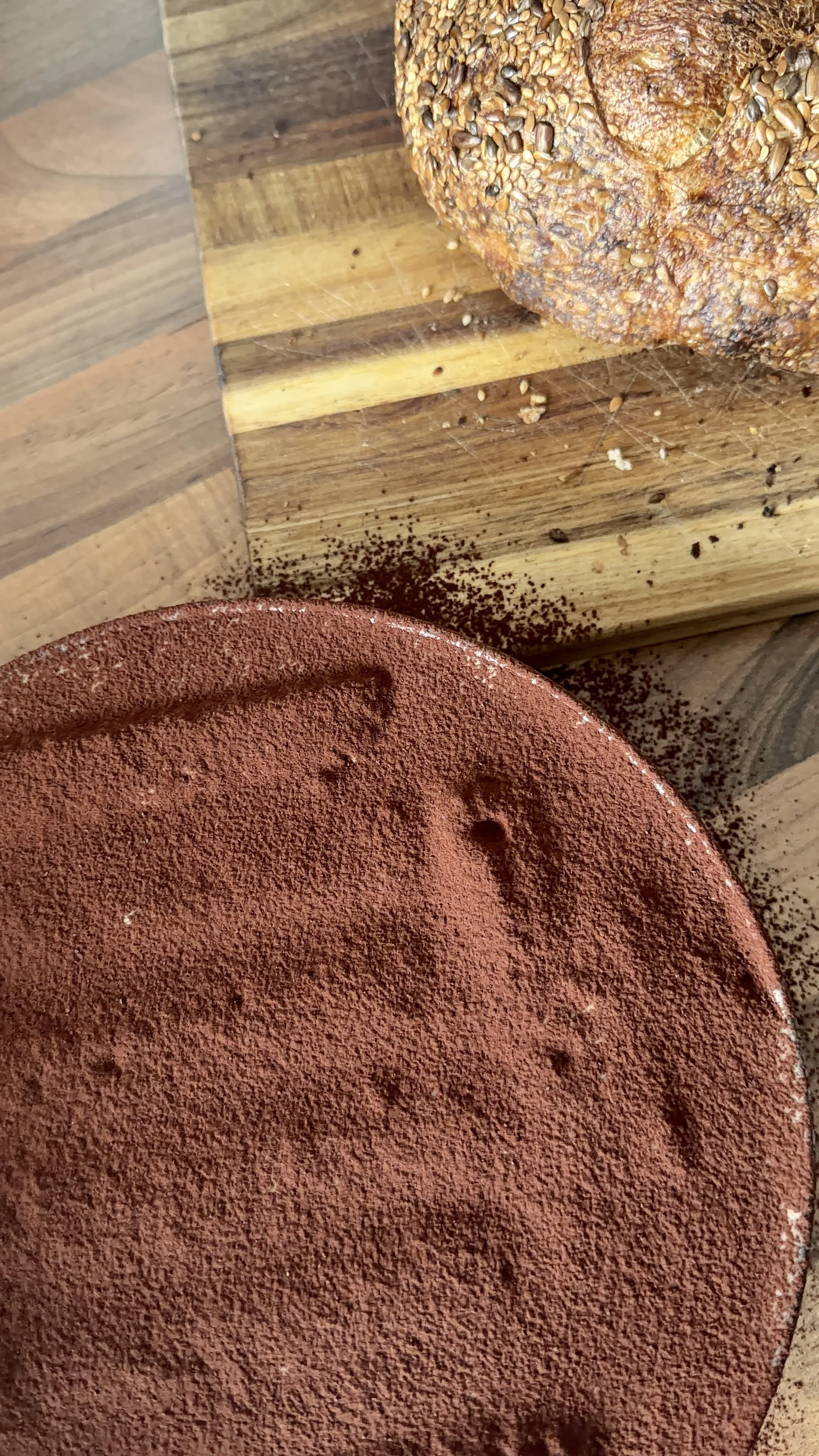
5. Finish and serve. Just before serving, dust generously with unsweetened cocoa powder through a fine sieve held high above the dish - this gives you an even, delicate layer rather than clumps. Do this at the last minute, not in advance, as cocoa absorbs moisture in the fridge and turns dark and damp.
Serve cold, straight from the fridge.
What you might ask:
-
You can, but the flavour will be noticeably thinner and less bitter. Tiramisu without alcohol relies entirely on coffee for its contrast against the rich cream. A weak or flat coffee means the whole dessert tastes one-dimensional. If you don't have an espresso machine, a moka pot is an excellent alternative. If instant is your only option, make it very strong, at least double the usual amount of powder, and let it cool completely before using.
-
The sabayon comes off the heat at around 70°C. If you fold it into the clotted cream while it's still warm, it will melt the fat in the cream and you'll lose all the airy, mousse-like texture you just worked to create. Patience here makes a real difference to the final result.
-
Not necessarily. Espresso is mostly water, which gives the yolks less to grip onto compared to the wine used in traditional tiramisu. You'll always get slightly less volume with an espresso sabayon. As long as it's pale, aerated, and at ribbon stage, it will work. Just fold carefully and the texture will still be good.
-
Savoiardi are designed to absorb liquid quickly. One second per side is enough to soak them through to the centre, any longer and they turn to mush, which makes the layers collapse and the texture soggy. If your sponge fingers are on the softer side (brands vary a lot), err toward half a second.
-
Yes, in fact you should. The overnight rest in the fridge is when everything comes together properly: the sabayon sets, the cream firms up, and the coffee distributes evenly through the sponge. A tiramisu served too soon is soft and under-set. Make it the evening before and it will be noticeably better.
-
Mascarpone is the traditional choice and a very good one. Clotted cream is richer, slightly sweeter, and has a more complex flavour, there's a faint butterscotch note that works beautifully with bitter espresso. The texture is slightly denser when set, which means you get a cleaner, more sliceable tiramisu rather than a mousse-y one. If you can't find clotted cream, mascarpone is a direct substitute at the same quantity.
-
Yes, and it makes a few things easier. Marsala is the traditional choice, it's a fortified Sicilian wine with nutty, oxidised notes that complement the coffee well. Dark rum or amaretto also work beautifully, with the latter particularly good against the butterscotch character of the clotted cream. Add 30-40g to the dipping espresso, or include a small splash in the sabayon in place of some of the espresso. Alcohol helps stabilise the sabayon foam and adds a sharpness that cuts through the richness. If you're using it, you can also skip the extra-strong coffee approach since the alcohol is doing some of that cutting work for you.
Nutritional information Per 100g
Calories~320 kcal | Carbohydrates~29g of which sugars~21g | Fat~17g | Protein~5g
Want more recipes like this?
Join Mèu Mail Club - recipes from my childhood straight to your home, every month.